
如何在SoC設計中使用事務處理(二)
 加入技術交流群
建模、驗證與調試需要統一標準的符號和框架,以便使架構師和設計工程師能夠協同進行復雜SoC的開發。事務處理級模型(TLM)是進行這種分析的理想模型,在片上系統(SoC)設計中使用事務處理級建模,可讓設計從高效率協同仿真和高產出的分析與調試中受益。
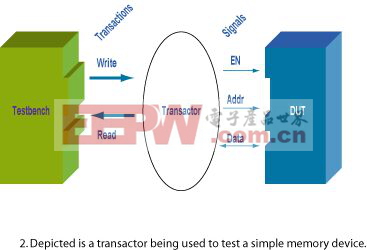
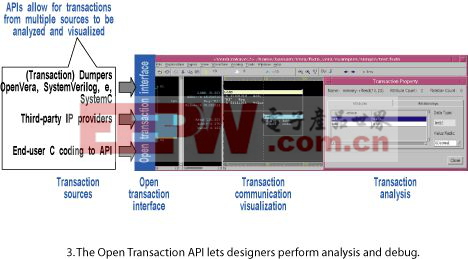
本文引用地址:http://cqxgywz.com/article/148679.htm 下面是對圖2所示的事務處理進行建模的一個簡單代碼段。這個類的旨在于將事務處理數據記錄到作為trans_db instance dump_file類的事務處理數據庫中。輸出被顯示在圖3最右部分。
// Inside program or some other OpenVera context
trans_db dump_file;
trans_stream stream1;
trans_type mem_read;
trans_handle h1;
// open a database file
dump_file=new(test);
// create the memory stream under the test.duv.bus scope
stream1=new(dump_file, test.duv.bus, memory);
// create the read transaction type in the memory stream
mem_read=new(stream1, Read);
// define 2 attributes in the read transaction type
mem_read.create_attr(Addr, INTEGER_DT);
mem_read.create_attr(Data, INTEGER_DT);
delay(10);
// begin a memory read transaction at 10
h1=mem_read.begin_now();
h1.log_integer_attr(Addr, 170);
h1.log_integer_attr(Data, 123);
delay(20);
// end h1 transaction at 20
h1.end_now();
// close the database file
dump_file.close();
 |
 |






評論